
Leading Space Intelligence: Into the Future — HKATA Co-organises Space Intelligence Innovation Event
Uniting Scientific Research Forces from Beijing, Shanghai, and Hong Kong to Witness a New Milestone in Hong Kong's Aerospace Development
On 29 April 2026, a full-day event bringing together government, industry, academia, and the investment community was held in Hong Kong.
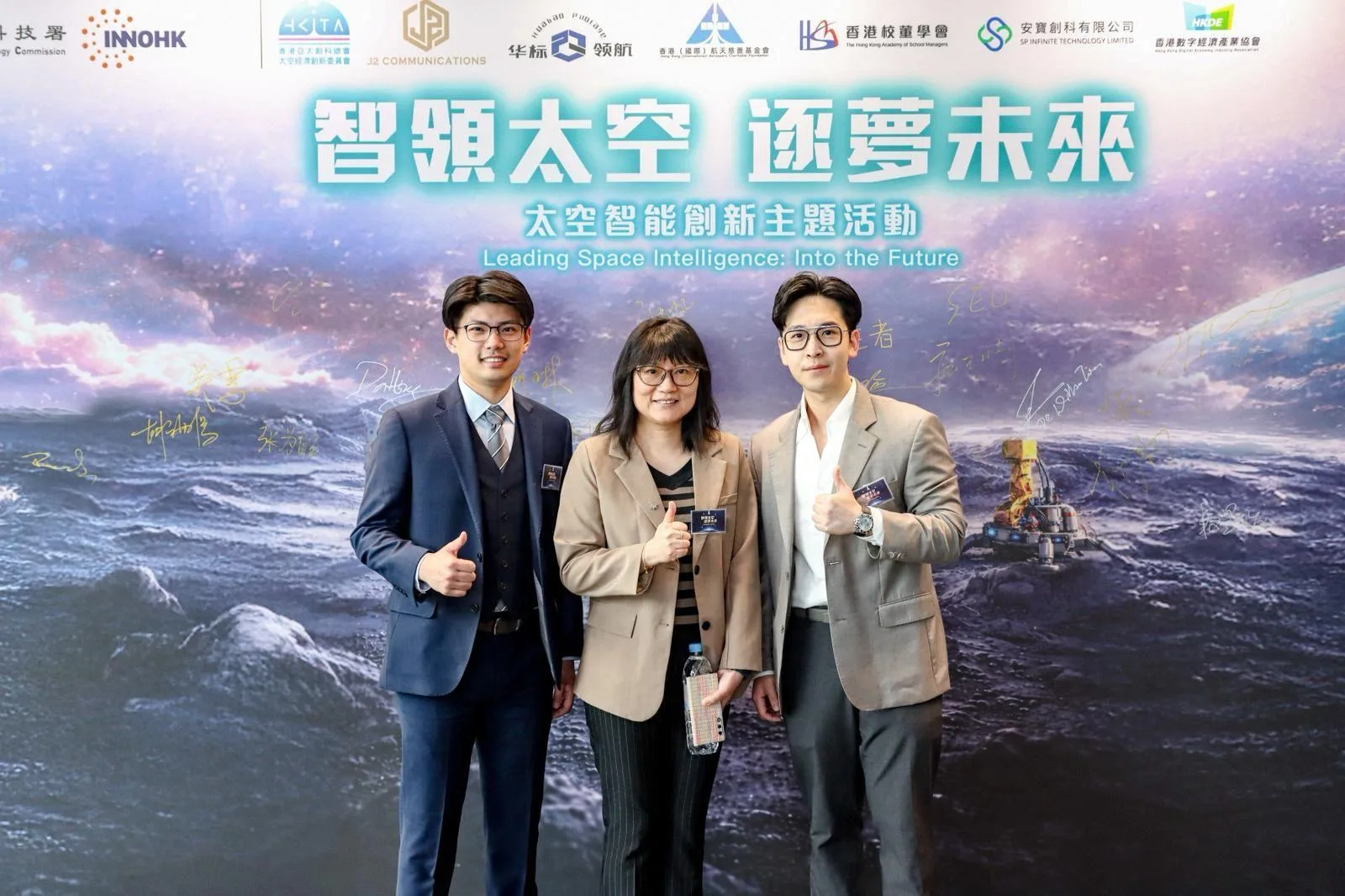
The "Leading Space Intelligence: Into the Future" Space Intelligence Innovation Event, hosted by the Hong Kong Space Robotics and Energy Centre (HKSREC) — established under the InnoHK research platform and led by the Hong Kong University of Science and Technology (HKUST) — was successfully held. As one of the event organisers, the Hong Kong Aerospace Technology Education Academy (HKATA) was represented by its two Co-founders, Mr. Rand Ko and Mr. Wiva Wei, who participated throughout the event, engaging in exchanges with top aerospace leaders from Hong Kong, Mainland China, and overseas.
For HKATA, this was not merely an attendance — it marked the first time Hong Kong's aerospace education sector was included in a national-level space science research dialogue.
⭐ An Unprecedented Gathering of Government, Academia, and Research
The event featured a distinguished lineup of Guests of Honour, including:
Mrs. Regina Ip, Convenor of Non-official Members of the Executive Council Dr. Wong Yuen-shan, Head of the Chief Executive's Policy Unit Professor Wu Ji, President of the Chinese Society of Space Research Professor Bernard Foing, Executive Director of COSPAR's International Lunar Exploration Working Group and Chairman of the Lunar Explorers Society Professor Charles Wang-Wai Ng, HKUST Vice-President for Institutional Advancement Professor Yang Gao, Director of HKSREC
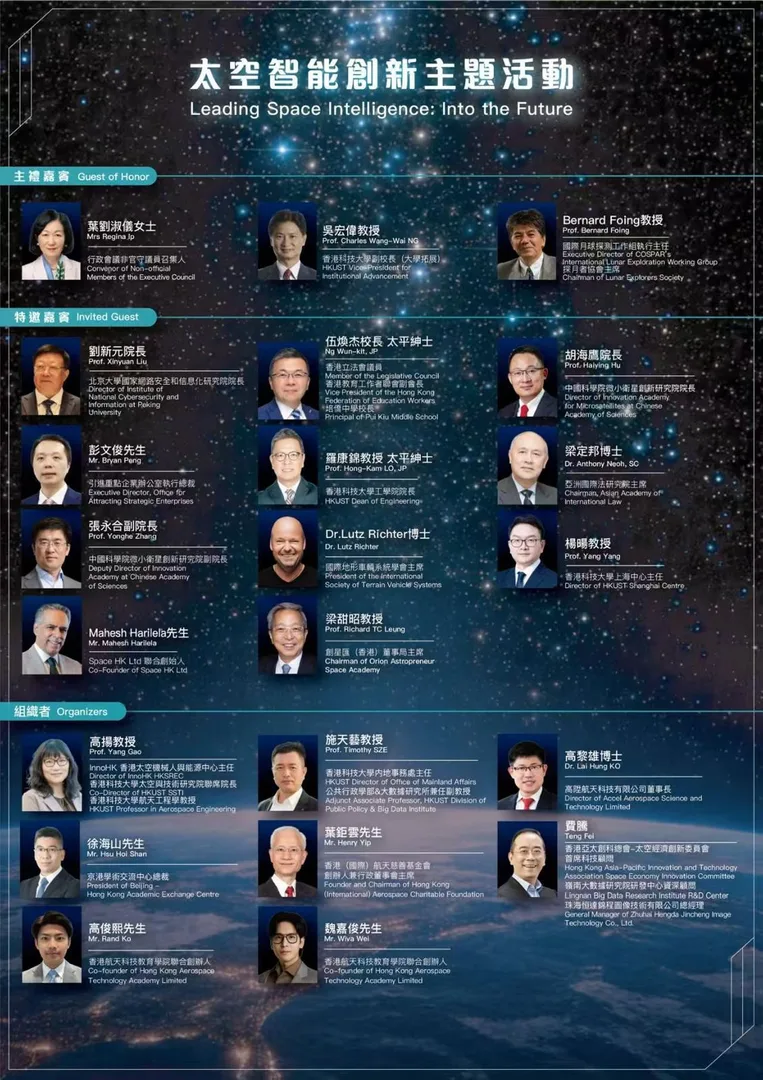
Invited guests further included over twenty heavyweight figures, such as Professor Liu Xinyuan, Director of the Institute of National Cybersecurity and Information at Peking University; Professor Hu Haiying, Director of the Innovation Academy for Microsatellites at the Chinese Academy of Sciences; Professor Zhang Yonghe, Deputy Director of the same academy; Mr. Ng Wun-kit, JP, Member of the Legislative Council; Mr. Bryan Pang, Executive Director of the Office for Attracting Strategic Enterprises; Professor Hong-Kam Lo, JP, HKUST Dean of Engineering; Dr. Anthony Neoh, SC, Chairman of the Asian Academy of International Law; Dr. Lutz Richter, President of the International Society of Terrain Vehicle Systems; and many more.
🚀 Launch of the "Beijing-Shanghai-Hong Kong Innovation Hub Initiative on Space Intelligence"
The highlight of the event was the launch ceremony of the "Beijing-Shanghai-Hong Kong Innovation Hub Initiative on Space Intelligence," co-officiated by Mr. Ivan Lee, Commissioner for Innovation and Technology, and the Guests of Honour. This marked the formal commencement of in-depth cross-regional scientific research collaboration in space intelligence among Beijing, Shanghai, and Hong Kong.
HKATA Co-founder Mr. Rand Ko also stood on stage alongside the distinguished guests to witness the launch moment.
As the device lit up and thunderous applause filled the venue, those standing on stage were not only scientists and officials — but also educators. Because for an industry to go far, it needs not only technology, but also a continuous pipeline of talent.
🌕 Keynote Speech: Hong Kong's Operational Robot for Lunar Landing
Professor Yang Gao, Director of HKSREC, delivered the keynote speech introducing the team's "Hong Kong Operational Robot" developed for the national Chang'e-8 lunar mission. The project focuses on embodied intelligence and operations in extreme environments, with the robot equipped with a mobile charging station and dexterous manipulation capabilities.
Professor Gao noted: "Aerospace research relies on cross-sector, cross-disciplinary, and cross-industry collaboration. Therefore, while actively contributing to national projects, our centre is also committed to promoting industry participation through diverse exchange activities, driving the translation of cutting-edge technologies, and injecting new momentum into Hong Kong's aerospace industry development."
HKUST Vice-President Professor Charles Ng summed up Hong Kong's position in one sentence: "At HKUST, we are not watching from the sidelines — we are writing this chapter ourselves."
HKUST's concrete achievements include: launching Hong Kong's first higher education environmental remote sensing satellite in 2023; being commissioned by the China National Space Administration in 2024 to lead the Chang'e-8 international "Hong Kong Operational Robot" project; and developing the world's first lightweight, high-precision collaborative observation payload for carbon dioxide and methane.
💬 Two Expert Forums | Mr. Rand Ko: "Let Children Touch Space"
The event featured two expert forums exploring "Hong Kong-Mainland Space Innovation Collaboration" and "Commercial Aerospace Opportunities and Investment."
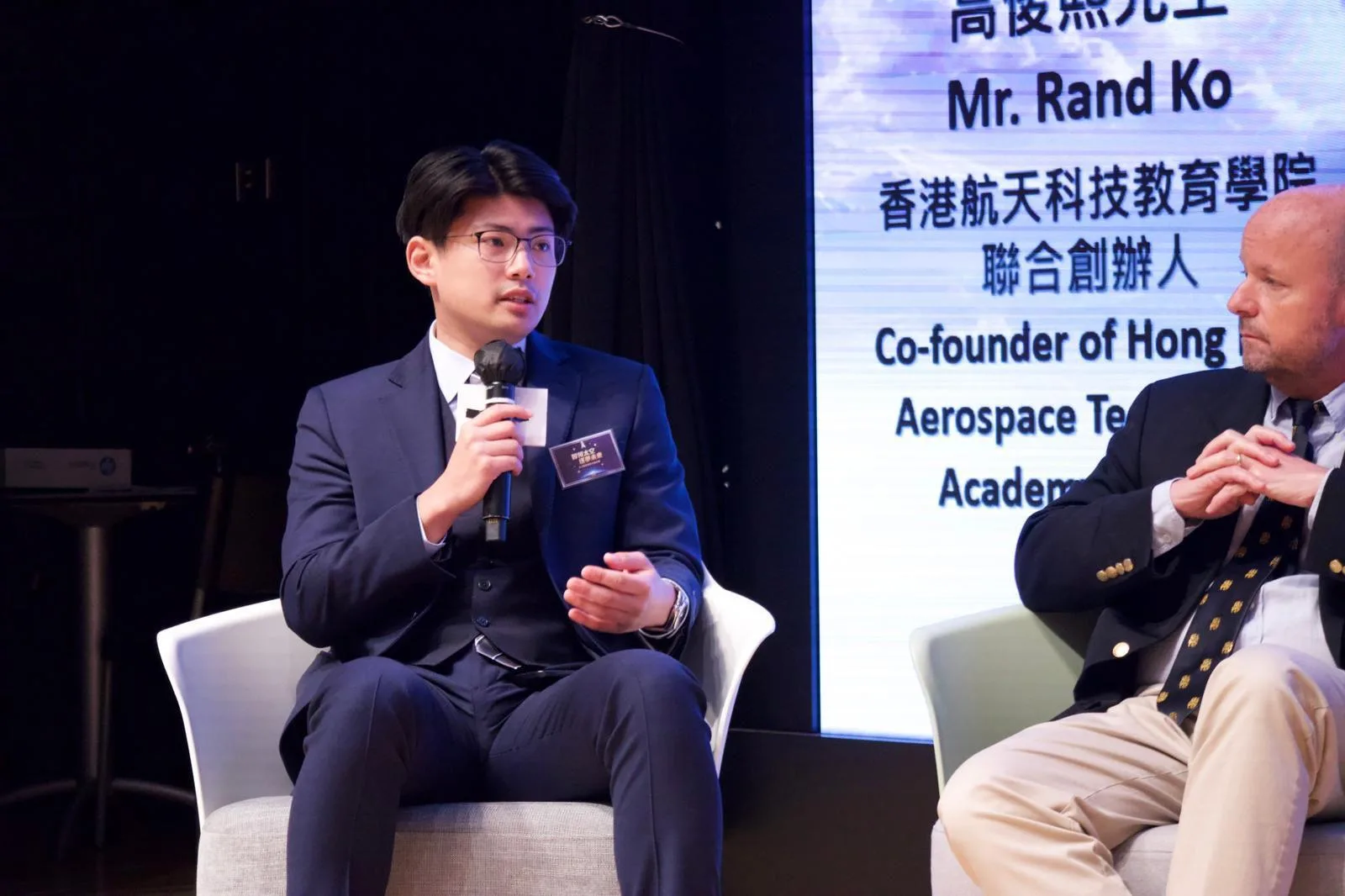
HKATA Co-founder Mr. Rand Ko was invited to participate in the forum discussion, exchanging views on stage with international aerospace experts. As one of the few education sector representatives in attendance, he steered the conversation towards a less discussed but equally critical dimension — where does talent come from?
Amid discussions about lunar robots, satellite constellations, and return on investment, Mr. Ko pointed out a reality: Hong Kong's aerospace research has already reached the national team level, yet local students' understanding of aerospace technology still largely remains at the level of textbook illustrations and news clips. While the ceiling for scientific research keeps rising, the foundation of education must be strengthened in parallel.
He emphasised that HKATA's positioning is not about "running yet another STEM hobby class," but about translating the technological logic actually used by the industry — satellite module assembly, ground station operations, telemetry data interpretation, AI autonomous control — into learning pathways that students aged 5 to 18 can understand, get hands-on with, and progressively advance through. This is precisely why HKATA's curriculum is co-developed with a listed commercial aerospace technology company: teaching materials must originate from real industry, not an imagined version of space.
"We believe aerospace education should not remain confined to textbooks. Only when young people can truly 'touch' space will they believe they have a part to play."
Mr. Wiva Wei: Unveiling the Nine-Level Aerospace AI Curriculum Framework
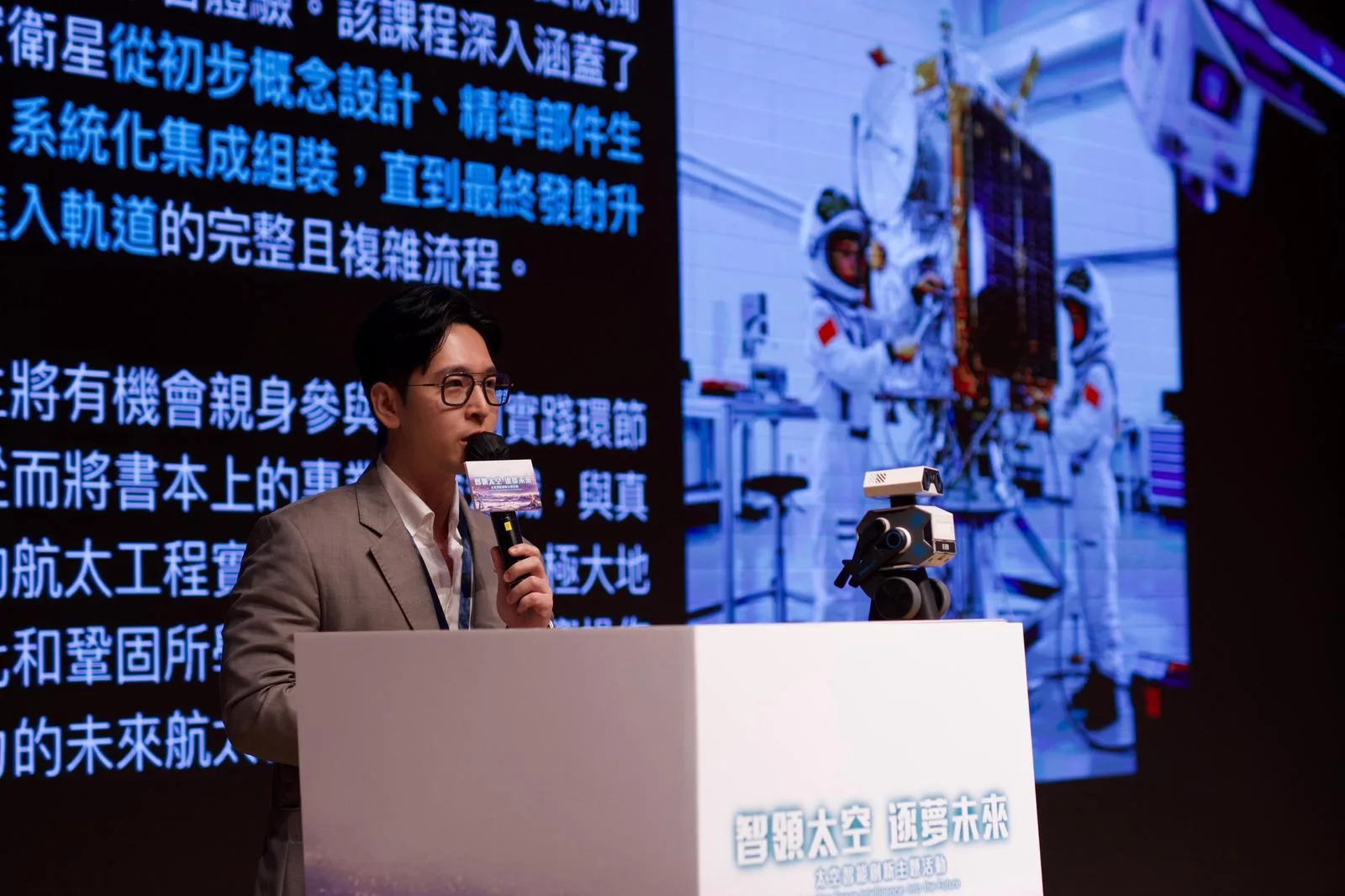
The other Co-founder, Mr. Wiva Wei, took the stage to present HKATA's curriculum architecture to the education, academic, and industry representatives in attendance.
He publicly revealed the core design of HKATA's curriculum framework:
Each level comprises over 20 lessons, each with a fixed duration and a clear, structured progression Covers the full age range from primary to secondary school, advancing level by level in line with students' cognitive development Flexibly adaptable to schools' actual needs — compatible with short-term thematic courses, holiday programmes, and regular classes alike Spans six major aerospace technology themes: Space Science, Rocket Engineering, Artificial Satellites, Mechanical Engineering, Artificial Intelligence, and Aerospace History & Development Features a nine-level certification system to mark learning progress, making every milestone visible and measurable Mr. Wei explained that the curriculum adopts a four-stage pedagogy of "Theory → Simulation → Building → Practice," with students using industry-grade teaching equipment such as satellite platforms, robotic arms, and rocket simulators — not toy-level tools. He also mentioned that HKATA has served over 2,000 students to date, established partnerships with more than 30 schools, and set up an immersive learning space of over 6,000 square feet in North Point, ensuring the curriculum is not just a plan on paper but a fully operational system.
After the session, multiple education sector representatives proactively approached the HKATA team to explore feasible options for introducing the curriculum into their schools.
✨ From National Missions to the Classroom — Education is the Last Mile
When Hong Kong's research teams are already participating in the Chang'e-8 lunar mission, the next question is: who will carry the torch?
This is precisely the reason HKATA exists. We believe aerospace education should not remain confined to textbooks — by using real satellite technology and industry-grade engineering teaching materials, we enable Hong Kong's young people to truly "touch" space, thereby nurturing the next generation of aerospace talent for both the nation and Hong Kong.
HKATA will continue to work hand in hand with all sectors to let dreams fly higher and farther. 🌍✨
Want your child to experience an aerospace AI course first-hand?
From rocket principles to satellite technology, from AI applications to engineering thinking — HKATA has prepared the first step to space for every child.
👉 Register for a trial class now
🚀 Today's students could be tomorrow's aerospace engineers.
Related category
Event Highlight


